Koohy Group: Machine Learning and Integrative Approaches in Immunology
- Centre for Computational Biology
- MRC TIDU
We would like to understand the functional and molecular mechanisms of the immune system in various immunologically important conditions such as cancer, infection, autoimmune disease as well as ageing. We have a special interest in computational cancer immunotherapy such as antigen presentation, neo-antigen identification and T cell recognition of neo-antigens as well as interrogating the immune response to personalized vaccines from neo-antigens.
B and T cells are two key components of vertebrates’ adaptive immune system. The efficiency of an adaptive immune response at any given time point is based on the huge diversity of receptor proteins sitting on the surface of B and T cells which are known as BCRs and TCRs (collectively as the immune repertoire). The diversity of immune repertoire is initiated by chromosomal rearrangement of V, D and J gene segments in different BCR and TCR loci. Diversification is further enhanced by somatic hypermutation and class-switching in B cells and alpha and beta pairing in T cells. Understanding regulatory mechanisms behind this huge diversity of the immune repertoire has implications in further understanding of immune response to cancer, infection and autoimmune disease.
We therefore take a multidisciplinary approach to develop and apply cutting edge computational and machine-learning techniques to investigate the alterations to the immune response under immunologically interesting – though life threating -- conditions such as cancer and infection. Current ongoing projects and collaborations include:
1- In collaboration with Prof. Cerundolo's group, our focus is to characterize TCR sequences expressed by tumour infiltrating T lymphocytes and to identify neo-antigens derived from tumours’ somatic mutations. This project involves integrative analysis of big ‘omics’ datasets including of transcriptome, proteome and ChIP-seq.
2- In collaboration with Prof Simmons’ group, using single-cell and functional genomics approaches we aim to characterize molecular mechanisms and pathways underpinning pathology in inflammatory bowel disease.
3- In collaboration with Prof Dong’s group, again using a single cell approach, we investigate age-associated changes in T cell fate and clonal expansion.
4- A comprehensive investigation of age-associated alterations in mouse developing B cells, in collaboration with a number of Immunologists and Cell Biologists at the Babraham Institue.
Highlights of our previous immunologically interesting works include collaboration with scientists at the Babraham Institute where:
- We have measured V gene usage in mouse heavy chain locus, employed supervised and unsupervised machine learning techniques and shown that the specificity of Recombination Binding Gene (RAG) plays an important ‘permissive’ role in VDJ recombination. The frequency of V gene usage, however, is determined by one of the two regulatory mechanisms that have been evolved alongside the protein coding sequences of V genes (figure 1).
- As a follow up to the heavy chain locus, we have also interrogated the genetics and epigenetics underpinning the V(D)J recombination in mouse light chain locus (https://www.frontiersin.org/articles/10.3389/fimmu.2017.01550/full). In addition, we have identified V genes from both heavy and light chains whose frequencies in V(D)J usage significantly change during aging.
DPhil Project Available: 2026 Koohy Group: Decoding the underlying rules of T cell response by AI and Machine-Learning strategies — Radcliffe Department of Medicine
Our team
-
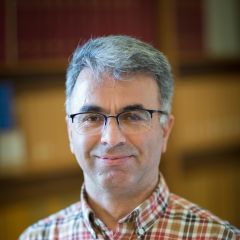
Hashem Koohy
Associate Professor of Systems Immunology, Member of Congregation
-

Chloe Hyun-Jung Lee
Postdoctoral researcher
-
Benjamin McMaster
DPhil Student
-
Poorva Jain
DPhil Student
-
Kexin Xu
DPhil Student in Medical Science
-
Yasmin Mann
NIH-Oxford DPhil Student
-
Ili Ilievski
Data Scientist