Anna Aulicino
PhD
Postdoctoral scientist
My research career has been consistently focused on understanding how bacterial pathogens interact with their hosts at the molecular and cellular level. I trained as a microbiologist and have worked across multiple systems and technologies with a long-standing interest in host–pathogen interactions. Throughout my career, I have been particularly interested in how bacteria adapt to complex host environments and how these adaptations shape disease outcomes.
I am currently developing advanced human infection models to study invasive non-typhoidal Salmonella (iNTS), a major cause of severe systemic disease worldwide. My work combines human intestinal organoids and ex vivo tissue infection models to recreate physiologically relevant infection scenarios that cannot be captured by traditional cell lines or animal models.
By integrating 3D infection systems with cutting-edge technologies such as dual single-cell RNA sequencing and spatial transcriptomics, I aim to map host–pathogen interactions directly in human tissue and uncover how invasive bacteria breach the intestinal barrier, persist within host cells, and reprogram epithelial responses during infection.
Recent publications
Author Correction: Spatial fibroblast niches define Crohn's fistulae.
Journal article
McGregor C. et al, (2025), Nature, 648
Tracking in situ checkpoint inhibitor-bound target T cells in patients with checkpoint-induced colitis.
Journal article
Gupta T. et al, (2024), Cancer Cell, 42, 797 - 814.e15
Dual RNA sequencing reveals dendritic cell reprogramming in response to typhoidal Salmonella invasion.
Journal article
Aulicino A. et al, (2022), Commun Biol, 5
The battle for iron in enteric infections.
Journal article
Sousa Gerós A. et al, (2020), Immunology, 161, 186 - 199
Single-cell atlas of colonic CD8+ T cells in ulcerative colitis.
Journal article
Corridoni D. et al, (2020), Nat Med, 26, 1480 - 1490
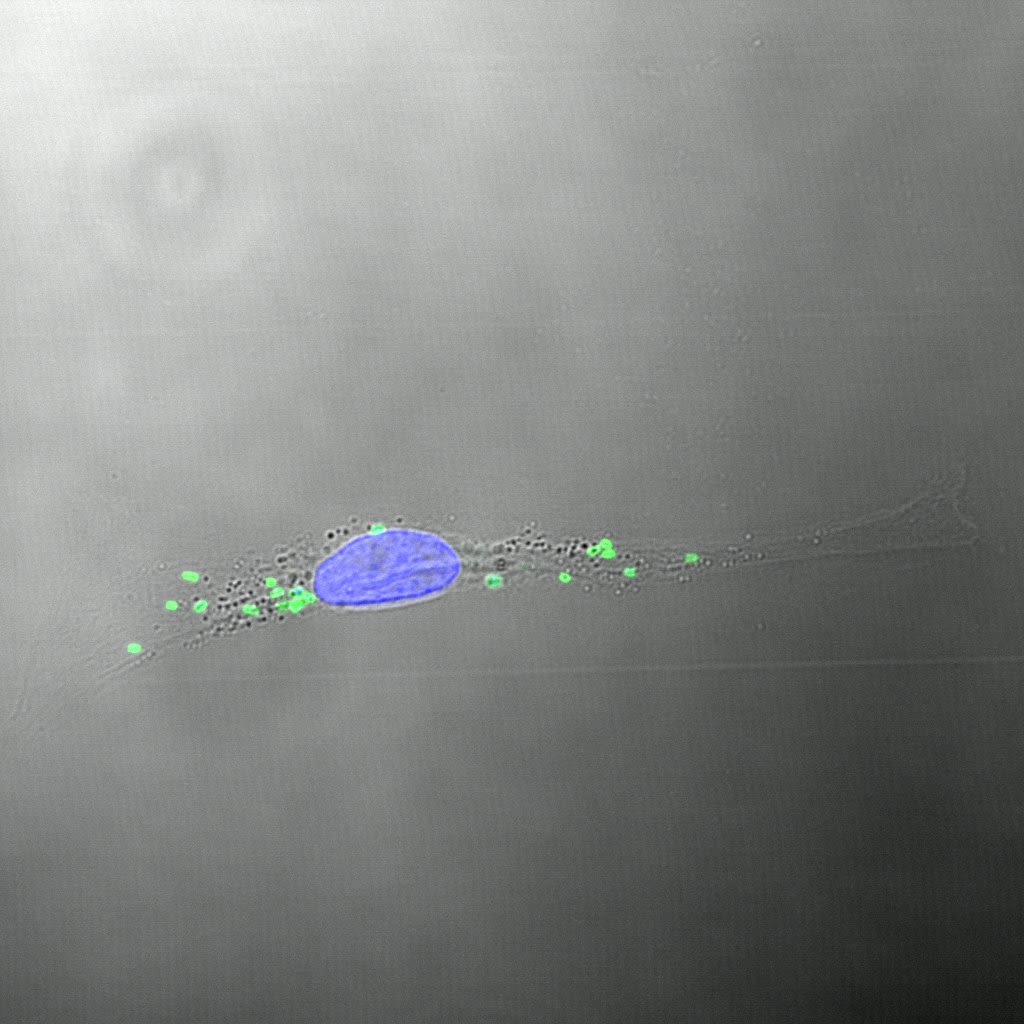
Human intestinal organoid infected with invasive non-Typhoidal Salmonella