
Neuromuscular Disorders
Founded in 1977 by Prof John Newsom-Davis at the Royal Free Hospital along with Prof Angela Vincent
Group moved to the Weatherall Institute of Molecular Medicine in 1987
Prof David Beeson and Prof John Newsom-Davis set up the UK national congenital myasthenia referral service in 2000
Prof Yin Dong has been leading the group since Prof Beeson's retirement in 2021
We carry out fundamental and translational research into the neuromuscular junction, translating our understanding of the molecular mechanisms of disease into developing diagnostic assays and new treatments. Our work led us to be commissioned to provide a National Advisory and Diagnostic Service for genetic (including congenital) myasthenic syndromes. We have also carried out several preclinical trials on new treatments for genetic myasthenic syndromes, oftern in collaboration with industrial partners.

Overview
We are a collaborative, multidisciplined team that likes to use a variety of experimental approaches to answer the scientific questions we are investigating. In particular, we use electrophysiology, structural biology, biochemistry, biophysics, molecular biology, cell biology, and in vivo models to study neuromuscular biology from atomic to whole organism scales.
ResearcH
Our group has researched the neuromuscular synapse for nearly 5 decades, and have developed a large number of tools to study both study its biology, and to model disease. This deep understanding enables functional analysis of mutations at the molecular level to be directly correlated with measurements of defective synaptic transmission in vivo and with the clinical features of the patients.
Thus, through collaboration with the UK national congenital myasthenia referral service, we provide a translational research platform from bedside to bench and back, with the lab research generating data directly relevant to patient treatment regimes. Moreover, a detailed knowledge of inherited dysfunction of neuromuscular transmission forms a paradigm for investigation of other neuromuscular disorders, and those that affect multiple biological systems.
Our team
-
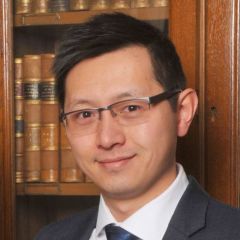
Yin Dong
Associate Professor
-
David Beeson
Emeritus Professor
-
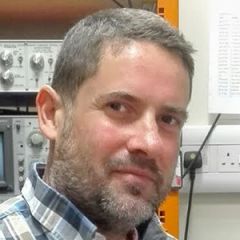
Richard Webster
Senior Post-doctoral Research Scientist
-

Susan Maxwell
Research Assistant
-
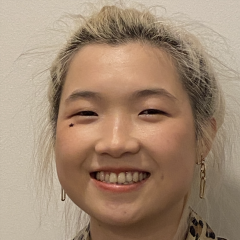
Anna Li
Postdoc
-
Angela Vincent
Emeritus Professor of Neuroimmunology
-
Jing Wang
Research Assistant
-
Lara Fragapane
DPhil Student



Research projects
- Developing new treatments for genetic myasthenic syndromes and congenital disorders of glycosylation
- Understanding the basic biology of neuromuscular junction
- Studying the lipid linked oligosaccharide transfer chain
Congenital Myasthenia Service
The Congenital Myasthenia Service provides a nationally commissioned specialised service for the diagnosis and management of children and adults in whom a congenital myasthenic syndrome is suspected.
Our group carries out functional characterisation of genetic variants of unknown significance found in suspected genetic myasthenic syndrome patients to give an indication of variant pathogenicity on a research basis. Our assays include:
• Electrophysiology to assess AChR channel kinetics for fast or slow channel syndromes or reduced conductance syndrome.
• AChR cell surface expression to test for AChR deficiency syndromes.
• AChR clustering assays to test pathogenicity of RAPSN, DOK7, MuSK, LRP4, COL13A1, AGRN, and AChR subunit variants.
• Exon trapping to test splice site mutations and synonymous intronic variants - Reporter assays to test for promoter variants.
• Expression assays to test CHAT, COL13A, COLQ, GFPT1, DPAGT1, MUSK, AGRN, ALG2, ALG14, TOR1AIP1 and GMPPB.
• Enzyme assays for glycosylation genes DPAGT1, ALG13, ALG14,
Latest publications
Mouse Model of Fast-Channel Genetic Myasthenic Syndrome Carrying Chrne p.P141L Mutation.
Journal article
Webster RG. et al, (2026), Biomolecules, 16
Protocol for stable cell line production to express muscle-type nicotinic receptor.
Journal article
Li A. et al, (2026), STAR Protoc, 7
SLC45A4 is a pain gene encoding a neuronal polyamine transporter.
Journal article
Middleton SJ. et al, (2025), Nature, 646, 404 - 412